


Accounts receivable (AR) financing lets you convert your outstanding invoices into cash immediately. The AR financing provider gives you a large percentage of your outstanding invoices upfront (typically 80 to 90%) in cash, so you can settle operational expenses while waiting for slow-paying customers.
While AR financing can be an effective way to quickly access cash from unpaid invoices, the AR financing company you choose matters.
Getting AR financing from banks and traditional lenders can be challenging. Banks heavily scrutinize your customers’ creditworthiness, only covering high-quality receivables while rejecting invoices from low-rated buyers or those past 30 or 60 days.
Banks also prioritize low-risk business and avoid certain industries considered too risky, such as construction, healthcare and transport. As a result, less than 13% of businesses qualify for bank financing.
In addition, banks and most AR financing companies take around a week to fund. That’s because they ask for and underwrite substantial amounts of paperwork during the application process, including your accounts receivable aging report (showing customer balances and invoices), sales ledgers, financial statements (balance sheet, profit-and-loss), and tax returns among other paperwork. This makes them impractical for businesses in urgent need of financing.
To help businesses secure fast AR financing, we wrote this article comparing six AR financing companies based on the two criteria above: ease of qualification and funding speed.
Send us 4 months of bank statements and our team will email you AR financing offers that can fund as early as today or tomorrow.
1. Redline Capital
Same-day Accounts Receivable Financing with Just 4 Months of Bank Statements
Redline Capital offers financing solutions designed to help your business turn unpaid customer invoices into immediate cash.
We specialize in revenue-based financing, which is approved primarily based on your revenue. We don’t require perfect customer credit, long payment histories, or traditional AR-style risk profiles. As a result, over 80% of businesses that apply to us get approved.
To qualify, your business needs to:
- Earn at least $30,000 in gross monthly revenue.
- Be in practice for 12 months or more.
- Be located in the U.S.
The only paperwork we need is four months of bank statements to confirm your monthly revenue. Our minimal paperwork means underwriting is quick and can be completed in a matter of hours, allowing you to secure funding on the day you apply.
In comparison, it’s more challenging to get AR financing from a traditional bank. They follow strict criteria and request detailed information about your business and your customers. This may include:
- Your business financials, such as revenue and profit history
- A list of customers who owe you money
- Customer’s payment patterns, credit history, and any past issues
- Invoice details, including amount, due date, and payment terms
- The aging report showing outstanding invoices
- The total amount and number of invoices you’re financing
- Your internal processes for managing customer credit and collecting payments
How to Apply for Accounts Receivable Financing
With Redline Capital, you can apply for AR financing in under 5 minutes and get offers in your email inbox in 1 to 2 hours.
- Fill out this short form, which asks for your preferred amount, gross monthly revenue, and industry.
- Submit four months of bank statements. We never ask for tax returns, balance sheets, or other financial statements.
- We underwrite your application and run a soft check, which won’t impact your credit score. We won’t reject you for having bad credit, but good credit helps you qualify for lower rates, more flexible terms, and larger lump sums.
- We email you multiple offers for different revenue-based financing products. These include term loans, working capital loans, cash advances, and business lines of credit. Each offer highlights your financing amount, rates, weekly or monthly payments, term length, and any fees you may incur.
- Choose the offer that works best for your business.
- Once you accept an offer, you receive the funds immediately. Because of this straightforward application and approval process, most of our clients receive AR funding on the same day they apply.
In contrast, the application process from a bank or traditional AR financing company is much more convoluted:
- You need to prepare all the necessary documents, including financial statements, sales data, and a list of your outstanding invoices, noting customer names, amounts, and due dates. Ideally, your customers need strong credit and payment histories. You also need well-documented accounts receivable and a consistent flow of invoices.
- Contact the bank to complete the application (online or in person), providing details about your business and the receivables you want to finance.
- The bank then reviews your business and your customers’ creditworthiness. They analyze your specific invoices to assess risk and determine the amount you’re eligible for (usually 80–90% of the invoices). This value could be lower if the bank decides your customers are high risk.
- Once approved, the bank pays the agreed percentage to your business. Due to the mountains of paperwork and extensive underwriting involved, the entire process can take up to a week.
What Sets Redline Capital Apart from Other Accounts Receivable Companies
We Can Help You Secure Lower Rates and Better Terms
Redline Capital helps businesses access rates, terms, and discounts that aren’t available to the public.
That’s because we’re a broker who has sent hundreds of millions of dollars in applications to top business lenders like OnDeck, Biz2Credit, Headway Capital, Rapid Finance, and others. This enabled them to grow their lending business faster than they would on their own.
In return for all our business and as a performance incentive to keep delivering more high-quality applications, they give our clients priority pricing, wholesale rates, and discounts not available to those who apply to them directly.
Read more: Top 10 Construction Invoice Factoring Companies
We Don’t Ask for Collateral
We recommend avoiding offers that ask for collateral. This may be risky for your business, because if you cannot repay, the lender has the right to seize your assets, including equipment and real estate.
In many cases, you would not be able to operate your business without these assets. When you apply for Redline Capital financing, we send you offers that don’t require collateral.
We Always Act Professionally and Offer Great Support
A problem you may face when applying for AR financing is unscrupulous lenders who prioritize their profit over what’s best for your business. In many cases, they’ll send you expensive offers and repeatedly contact you to pressure you into accepting.
To avoid these low-quality lenders, make sure you read unbiased online reviews regarding the lender you’re considering and, if possible, talk with previous borrowers.
At Redline Capital, we are very proud of our zero-pressure approach and great customer service.
We’ll send you multiple transparent offers that we genuinely believe are the best options for you. You can take as long as you need to decide, and you’re welcome to go with a different lender if you prefer; you’re under no obligation to accept our offers. We answer any questions you may have during the process and leave you to make a final decision.
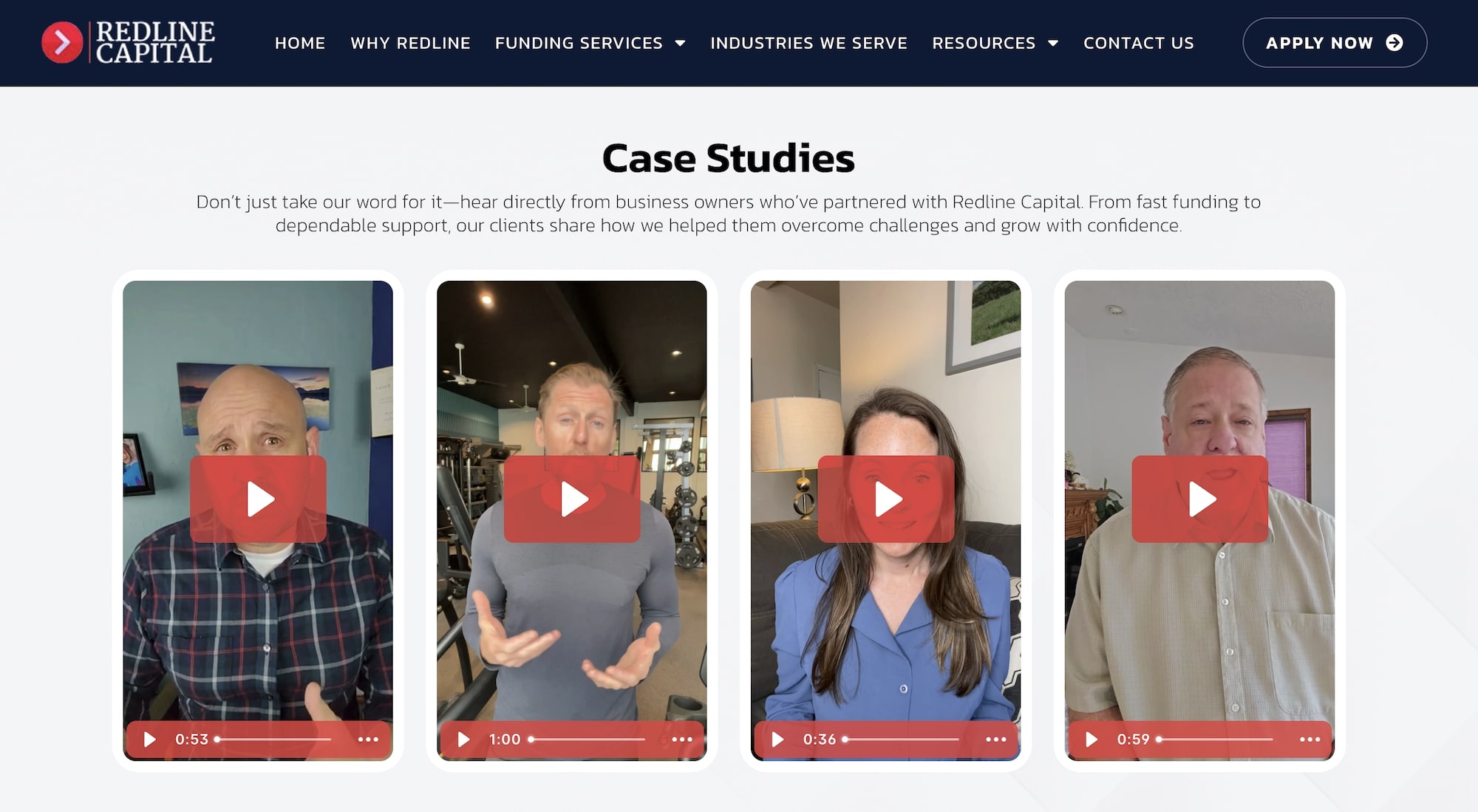
This is what some of our borrowers say about our process:


Check out our case studies page to learn more about what borrowers say about our closing speed and affordable rates:
Secure Fast Accounts Receivable Factoring with Redline Capital
Submit four months of bank statements to secure AR financing with Redline Capital, with same-day funding available in most cases.
2. Fast AR Funding

Fast AR Funding is an accounts receivable financing company that specializes in providing rapid advances against outstanding invoices, with the ability to fund on the same day, which makes them a strong option for companies that need short-term liquidity while they wait for customers to pay.
Instead of relying heavily on personal credit scores, their underwriting centers on the strength and collectability of your receivables. When your invoices are issued to reliable, creditworthy clients, Fast AR Funding can extend capital even if your credit profile is less than ideal, making their funding solution well suited to established businesses navigating short-term cash flow interruptions.
3. altLINE

altLINE is the AR division of The Southern Bank Company. They offer 80–90% advance rates, but the application process is extremely document-intensive. Funding can be extended up to $5 million, with fees ranging from 0.5% to 3% per 30 days. Same day funding is sometimes available, but a 6–12 month contract is required.
With altLINE, businesses benefit from direct bank funding, FDIC insurance, and the option to transition to traditional bank loans, if needed.
4. Scale Funding

Scale Funding (formerly TCI Business Capital) is a good option for startups, new businesses or those in high-risk industries. Advances can be up to 90% with funding amounts up to $30 million. You select which invoices to fund, and fees are calculated based on your monthly invoicing volume, industry, and customer payment trends. A contract is required in most cases, but month-to-month options are available.
Funding is available to a wide variety of businesses, including transportation, staffing, communications, distributors or wholesalers, oil and gas, manufacturing, and consulting. Scale Funding also offers other forms of support, including help with invoice processing, collections and credit checks.
5. JD Factors

JD Factors specialize in non-recourse AR financing, and they take on the risk if your customer fails to pay. This is a good option for businesses looking to minimize risk from bad debt, but comes with higher fees.
JD Factors offers flexible terms and businesses can choose the invoices to fund. Advance rates can go up to 92%, with fees starting at 2% per invoice. Typically, funding amounts range from $25,000 to $2 million. JD Factors cater to a diverse range of industries including transportation, manufacturing, staffing, oil and gas, distribution, communications, and others.
6. Porter Capital

Porter Capital offers both recourse and non-recourse financing options to match your risk tolerance. Businesses can choose the invoices to fund, with high advances rates up to 95% and fees around 1–2%.
To qualify, businesses require a minimum of $75,000 in monthly sales and funding amounts can go up to $25 million. Porter Capital covers a wide range of industries, including transportation, staffing, manufacturing, distribution, oil and gas, IT, consumer packaged goods, and professional services.
Alternatives to AR Financing
If, once you’ve looked into the pros and cons of AR financing, you decide that it may not be the best option for your business, here are some of the main alternatives that you may want to consider:
- Short-term business loans: Using a short-term loan enables you to get fast and flexible access to working capital, with repayments tailored to your cash flow needs. They are often unsecured loans, meaning you don’t need to provide assets as collateral.
- Merchant cash advances (MCAs): This is another short-term option, typically less than 9 months. MCAs allow your business to receive funds to cover urgent expenses or cash flow needs.
- Line of credit: Lines of credit offer access to capital as and when your business needs it. It’s a good option for businesses with fluctuating cash flow or those who need quick access to working capital. Your business can use funds as needed, only repaying the amount you use. After you’ve repaid the withdrawn amount, your line of credit is replenished to its original amount and can be used again.
Frequently Asked Questions (FAQs)
What is accounts receivable financing?
Accounts receivable (AR) financing is used to turn unpaid customer invoices into immediate cash. Businesses can borrow against these invoices, providing quick working capital instead of waiting 30–90 days for customers to pay.
How does AR financing work?
With AR financing, businesses “sell” their unpaid invoices to a lender and receive typically 80–95% of the invoice value upfront. The lender then collects payment from the customer and releases the remaining amount minus fees. This boosts working capital for operations, payroll, or growth by converting slow-paying assets into quick cash.
What are the 4 types of receivable financing?
The four main types of AR financing include:
- Invoice Factoring: Businesses sell your receivables (unpaid invoices) to a lender (factor); the factor then collects payment from customers, handling credit control.
- Invoice Discounting: Businesses use unpaid invoices as collateral for a cash advance from a lender, but keep managing customer collections and remain confidential.
- Asset-Based Lending (ABL): A wider financing solution where businesses can secure a line of credit or loan against different assets, including accounts receivable, inventory, and equipment.
- Selective Receivables Financing: Funding provided for specific invoices as needed,rather than the whole ledger.
What is the difference between ABL and ABF?
Asset-Based Finance (ABF) is a general type of financing product that uses assets as security, while Asset-Based Lending (ABL) is a specific type of ABF, typically a loan or line of credit using tangible assets like inventory or receivables as collateral.
What is the difference between AR financing and invoice factoring?
AR financing is a general term where businesses can use receivables to secure capital. Invoice financing is a specific type of AR financing where businesses sell unpaid invoices to a factor (lender); the lender becomes responsible for collection duties.
What are the benefits to accounts receivable financing?
The key benefits of AR financing include:
- Improved cash flow
- Easier qualification than traditional loans
- Fast financing, sometimes as quickly as on the same day
- You aren’t adding traditional debt to your balance sheet
- No need for strong credit history
Can accounts receivable financing be used by small businesses?
Yes, AR financing is a good option for small businesses to obtain quick working capital by advancing cash on unpaid invoices. It’s especially useful for businesses with long customer payment cycles (usually 30–90 days).
What fees are typically associated with accounts receivable financing?
AR financing fees typically include:
- Factoring Fee: The main cost for each invoice, usually 1% to 5% of the invoice value.
- Set-up Fees: Some lenders charge an initial one-time fee for establishing the financing facility.
- Administrative and Service Fees: These fees include charges for managing the account, especially for smaller businesses or complex arrangements.
- Interest: If structured as a loan against receivables (rather than selling them), businesses may have to pay interest on the funds advanced.
How to choose between accounts receivable financing companies?
To choose the best AR factoring company for your business, compare different service providers based on their proven industry expertise, collection rates, automation, integrated tech, security, and communication. Make sure they offer a scalable, customized solution for your business, not a one-size-fits-all approach. Read client reviews, talk to previous clients if possible and make sure you fully understand their system before you make a decision.