


As the name implies, revenue-based financing (RBF) is a financing option evaluated and approved entirely on your monthly recurring revenue. You don’t need large profit margins, perfect credit scores, low debt-to-income ratios, extensive tax returns, or anything else that traditional debt financing typically asks for.
A revenue-based financing model offers three main benefits for businesses:
- Easier qualification: Since revenue-based financing mainly looks at your revenue, you just need to meet the minimum revenue requirements to qualify.
- Faster funding: The only paperwork you need is a few months of bank statements verifying your revenue. This lightweight paperwork expedites the approval process and allows businesses to secure funding within one or two days of applying.
- Larger financing amounts: Many revenue-based financing providers can offer up to 200% of your business’s monthly revenue as a lump sum, while traditional debt financing rarely goes above 50%.
Despite those benefits, revenue-based financing isn’t the best option in every situation, and it’s important to understand both the benefits and drawbacks before making a decision.
So, we wrote this article to help you decide whether revenue-based financing is an option for your business. We take a closer look at the four benefits listed above while answering some frequently asked questions.
How Does Revenue-Based Financing Work?
Revenue-based financing gives businesses a lump-sum upfront payment in exchange for a percentage of their revenue, paid either weekly or monthly, until the full amount is paid off.
Unlike traditional loans with interest rates, revenue-based financing uses factor rates, expressed as a decimal that represents the total repayment amount relative to the original financing amount. For example, if you receive $100,000 with a 1.1 factor rate, you’ll repay $110,000 over the agreed term.
Main Benefits of Revenue-Based Financing Over Traditional Debt Financing
1. Easier Qualification Requirements
The biggest challenge businesses face with traditional debt financing is strict, unrealistic eligibility requirements. Banks typically ask for:
- Excellent credit scores (720+)
- Strong profit margins over multiple years
- Low debt-to-income ratios
- Extensive cash reserves
- High-growth
- 5+ years in business
- Personal guarantees and collateral
- Detailed financial statements and tax returns
Certain industries face additional hurdles regardless of their financial strength. Banks often view restaurants, retailers, and contractors, among other businesses, as high-risk, making approval extremely difficult even with strong financials. As a result, only about 13% of business loan applications are approved by traditional banks.
Qualifying for revenue-based financing is much easier because the only requirement you need to meet is the minimum gross revenue of the provider you’re applying with. Revenue requirements vary by lender, but they typically range from $10,000 to $50,000 per month. If your business meets the revenue threshold, you qualify.
For example, at Redline Capital, we only require:
- $30,000 in monthly revenue
- 12 months in business
- US-based location
Due to our straightforward eligibility requirements, our approval rate is over 80%.
2. Faster Funding
Traditional financing methods are notoriously slow. Most banks take 60 to 90 days to evaluate applications and fund loans. This timeline makes them impractical for urgent situations, such as settling payroll, purchasing inventory, or replacing faulty equipment.
This lengthy funding timeline stems from the extensive documentation banks ask for and have to underwrite, which includes:
- Multiple years of tax returns
- Profit and loss statements
- Balance sheets
- Business plans and loan purpose statements
- Cash flow projections
- Formal valuations
- Bank statements showing revenue growth over the past few years
With revenue-based financing, you only need a few months of bank statements showing your company’s revenue deposits. Because the paperwork requirements are minimal, revenue-based financing providers evaluate and underwrite applications in just a few hours. For example, we regularly help clients get funded on the same day they apply.
Here’s how the revenue-based financing application process works, using ourselves as an example:
- We review your business revenue and run a soft credit check.
- We email you multiple revenue-based financing offers outlining the total amount, terms and rates, fixed payments, and repayment schedule.
- You email us to let us know which offer best aligns with your business needs. Feel free to take as little or as much time as you want.
- You receive funds via wire transfer or ACH shortly after emailing us.
From submitting an application to receiving your funds, the entire process typically takes less than 24 hours. We’ve even helped clients get funded in under 4 hours.
3. Larger Financing Amounts
Another common challenge businesses face with traditional debt financing is that, even when they qualify, banks don’t approve them for the full amount they applied for. This problem is inherent to the business model of large banks, which tend to be highly risk-averse lenders.
From what we see, banks are hesitant to lend a business a lump sum exceeding 50% of its monthly revenue. Even reaching the 50% mark typically requires businesses to have exceptionally strong financials. This makes debt financing impractical for larger expenses and projects, such as major equipment repairs, expansion into new locations, or large inventory purchases.
With revenue-based financing, however, businesses can qualify for lump-sum amounts up to 200% of their monthly revenue.
That’s because revenue-based financing providers only review your company’s revenue and won’t restrict the amount you can borrow because of lower credit scores, slim profit margins, or any other factors that debt financing looks at.
Why Choose Redline Capital for Your Revenue-Based Financing Needs

You Can Secure Lower Rates with Redline Capital Compared to Most Revenue-Based Financing Providers
Many business owners believe that applying to a direct lender (the source of their funds) guarantees better rates because it eliminates broker fees.
While this may be true for low-quality brokers, working with an experienced broker like Redline Capital gives you access to rates and terms that aren’t available to the general public.
This is possible because we’ve generated hundreds of millions of dollars in applications for premium lenders like OnDeck, Rapid Finance, and Headway Capital over the years. In return for this consistent business, these lenders offer our applications preferred pricing, wholesale rates, and discounts not available to direct applicants.
Our lender relationships also give us the leverage to negotiate for you, securing terms tailored to your specific business situation — often better than the already exclusive offers we’re initially presented with.
Basically, when you apply through Redline Capital, you can leverage the relationships we’ve built over the past decade to secure better rates and terms for your business.
We’ve worked with businesses across industries such as:
- Healthcare
- Construction and contracting
- Restaurants
- Manufacturing
- Legal firms and consultants
- E-commerce stores
Read more: Top 6 Accounts Receivable Financing Companies
We Operate Ethically and Never Pressure Businesses Into Accepting Offers
One of the biggest problems in alternative lending is aggressive, high-pressure sales tactics. Many revenue-based financing providers bombard applicants with calls and emails, pressuring them to accept offers before they “expire.”
At Redline Capital, we take a zero-pressure approach. We present you with multiple funding options and give you the time and space to make the right decision for your business. We never push borrowers to accept offers, and you’re free to choose a different lender.
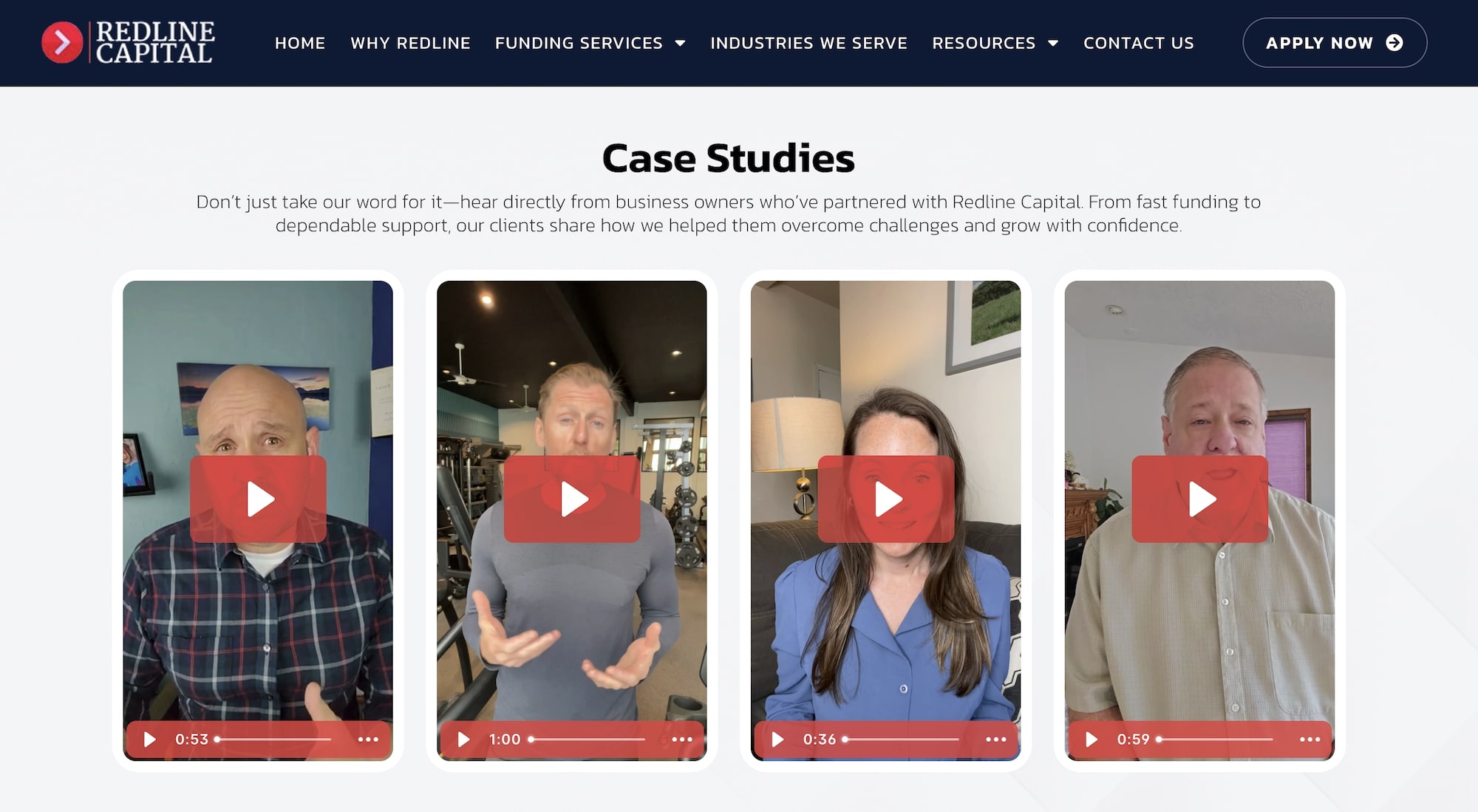
Here’s what businesses say about working with Redline Capital:


Visit our case studies page to hear directly from clients about their experience with our revenue-based financing process.
Submit 4 months of bank statements and we’ll send you multiple revenue-based financing offers that can fund as early as today.
Frequently Asked Questions
How Does Revenue-Based Financing Work?
Revenue-based financing works by providing small businesses with upfront capital in exchange for a percentage of future revenue. You receive a lump sum and repay a fixed percentage through daily, weekly, or monthly payments over 6-18 months. Payments are automatically deducted from your business account based on your revenue deposits.
What Are the Benefits of Revenue-Based Financing?
The main benefits include easier qualification (based primarily on monthly revenue), faster funding (often same-day), flexible repayment terms that adjust with your cash flow, and broader accessibility for small businesses that banks typically reject.
Why Would a Company Prefer Revenue-Based Financing Over Traditional Debt Financing?
Companies choose revenue-based financing when they need quick access to capital but don’t meet traditional lending requirements. Revenue-based financing is ideal for small businesses (e.g., SaaS companies, e-commerce stores) with strong revenue but may face challenges with credit, collateral, or extensive financial documentation that banks require.
What Are the Cons of Revenue-Based Financing?
The main disadvantages include higher costs than traditional loans, shorter repayment terms, and more frequent payment schedules. Revenue-based financing is also not suitable for businesses without consistent revenue streams.
Is Revenue-Based Financing Only for Startups?
No, revenue-based financing works for businesses at various stages. While some early-stage companies use revenue-based financing as an alternative to equity dilution, established businesses also use it for working capital, inventory financing, and growth initiatives when traditional loans, angel investors, and venture debt aren’t accessible.
How Much Funding Can a Business Get Through Revenue-Based Financing?
Funding amounts typically range from $30,000 to $2 million, depending on your monthly revenue. Most revenue-based financing providers will extend financing worth 100-200% of your monthly recurring revenue (MRR), though exact amounts depend on your business’s cash flow patterns and risk profile.
How Is Revenue-based Financing Different From Equity Financing?
Revenue-based financing is non-dilutive, meaning you don’t give up ownership or control of your business. Unlike equity financing, which provides capital in exchange for company shares, revenue-based financing is a debt-like instrument that you repay over time while maintaining full ownership.
Why Use Revenue-Based Financing Instead of Traditional Bank Loans?
Choose revenue-based financing when you need fast funding and don’t meet traditional lending criteria. Revenue-based financing is particularly valuable for businesses with strong revenue but face challenges with credit scores, limited operating history, or operate in industries that banks consider high-risk.
Can Early-Stage Startups Use Revenue-Based Financing?
Yes, early-stage companies with consistent revenue can qualify for revenue-based financing. Unlike venture capital, which focuses on growth potential or traditional loans that require extensive financial history, revenue-based financing only requires proof of monthly revenue above the lender’s minimum threshold.
What Makes Revenue-Based Financing More Appealing Than Traditional Loans?
Revenue-based financing appeals to entrepreneurs who need growth capital quickly without the extensive paperwork, perfect credit requirements, and lengthy approval processes of traditional lenders. The flexible repayment structure also aligns better with actual business cash flow than fixed monthly loan payments.
Ready to explore your revenue-based financing options? See what offers you qualify for with just four months of bank statements.